You built it with your own hands. Now it has to stand without them.
We work with founders of blue-collar companies like construction firms, trade contractors and manufacturers: owners who grew a real business through hard work and direct involvement, got it to 5-50 employees and $2-20M a year, and can feel it straining to go further on the same habits.
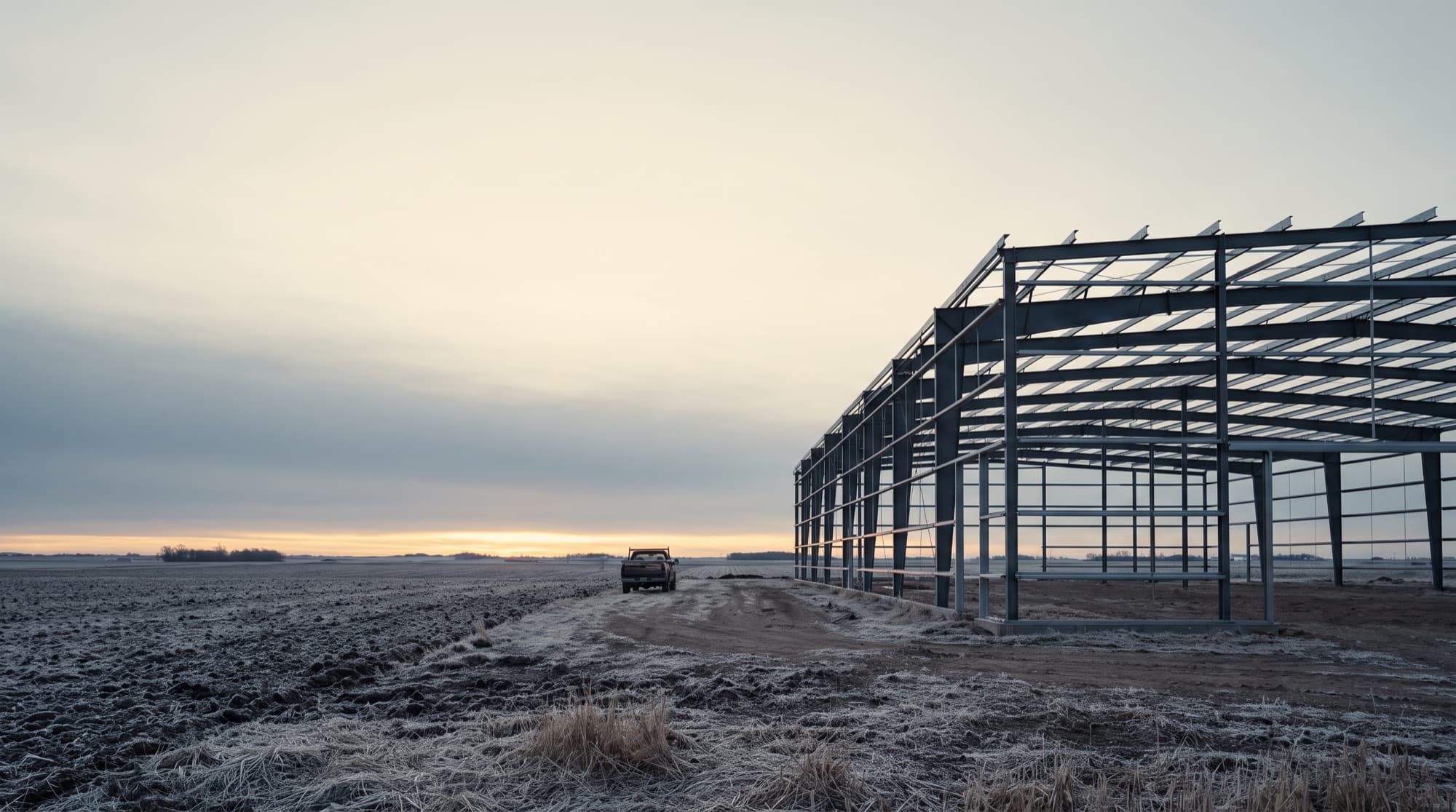
A real company, built by hand.
You learned the business by doing it, not from a management course. Your people are family men like you. You believe you’ve been entrusted with more than a paycheck.
- Role
- Founder, president, owner
- Industries
- Hard-working, blue-collar companies like commercial construction, specialty contractors, manufacturing and fabrication, custom millwork
- Size
- 5-50 employees, $2-20M a year
- Business age
- 4-20 years
- Where
- Mountain West, Midwest and Southeast United States
The problems that don’t stay fixed.
What keeps coming back. Each of these is a reason an owner finally picks up the phone.
The business still depends on you
If you’re still the brain, the glue, the customer whisperer and the emergency solver, you don’t have a legacy business. You have a job with employees.
Succession matters, and it isn’t built
You want the company to continue. There’s no documented plan for who carries what, and the next generation may not be ready or may not want a business that runs on fires.
Family, ownership and operations are tangled
Compensation, authority, decision rights and performance standards blur together when they aren’t drawn clearly, and family makes every blur personal.
Today keeps beating tomorrow
Cash, staffing, customers and process debt pull you back into reactive mode. You know what needs fixing, and maybe how. You have no time to fix it.
You need outside structure from someone who shares your values
You’re right to distrust an outsider who doesn’t. You still need one who can see the whole picture and tell you the truth about it.
The real fear
It isn’t failure. It’s finding out twenty years from now that you built a successful but flimsy company, when you meant to build a durable one for your grandchildren.
Is the business still too dependent on you?
The problem isn’t a lack of hard work. It’s that the business has outgrown founder-led decision-making.
Every important decision still comes through you.
Your managers struggle to make decisions without your input.
Critical knowledge exists only in your head.
Growth creates more complexity instead of more freedom.
You’re constantly putting out fires instead of leading.
You want to leave a business your family or employees can continue, and you’re not sure how.
We’re a fit when
- You’ve already built something real and you want it to outlast you.
- You’ll hear a hard finding about your own business and act on it.
- You want a partner who executes, not a binder of recommendations.
We’re not when
- You want someone to buy and install a software tool.
- You’re building to sell as fast as possible and nothing more.
Asked before the first call.
- Is the firm only for Christian business owners?
- No. The firm’s convictions are stated plainly and shape how it works, and it serves owners who want a durable, well-ordered business whatever brought them to the door.
- What size of company is the work built for?
- Founder-led companies of 5-50 employees and $2-20M a year, 4-20 years old: construction firms, trade contractors, manufacturers and almost any other blue-collar small business.
- Does the work start with software?
- No. It starts with an assessment of how work and decisions actually move. Technology is the seat the business is read from, and tools are chosen only where the roadmap calls for them.
- Is this coaching?
- Yes, sometimes. But we don’t want to stop at just talking. Once we figure things out, there could be coaching. But there’s also a whole lot of doing.
Ready to find out what’s keeping the business dependent on you?
The first step is a conversation about the business, nothing more. Tell us which decisions keep coming back to you and which fixes haven’t held. If the work is a fit, we’ll say so. If it isn’t, we’ll say that too.